
Cisco Chairman and CEO Chuck Robbins stated that attempts to slow down AI development are futile. He emphasised that the primary focus should be on enhancing security and defensive measures to match AI's rapid advancement. Robbins also discussed the need for guardrails in AI model releases, the importance of cyber hygiene, and the balancing act between innovation and regulation, particularly for countries like India. He believes AI will not be a net job disruptor but will move people up the value chain.

The second Film Federation of India and People for Animals CineKind awards were held on October 4 in Mumbai.

Chinese Foreign Minister Wang Yi stated that President Xi Jinping and Prime Minister Narendra Modi reached a crucial consensus during the BRICS summit, agreeing that China and India should be partners, not rivals. The leaders pledged to maintain peace and tranquility in border areas, deepen cooperation, and support each other in multilateral forums, aiming to strengthen the Global South and promote a multipolar world order.

Formula One will return to Africa after 33 years, with Rwanda securing a 10-year deal to host a Grand Prix from the early 2030s, promising tourism, investment and jobs.
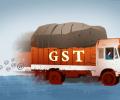
India's Goods and Services Tax (GST) receipts, after accounting for refunds, surged by 18.1 per cent annually to approximately 1.77 trillion in September, marking its fastest growth in six months. This increase was primarily driven by a significant rise in tax revenue from imports, which grew 26 per cent annually.

Formula One boss Stefano Domenicali heaped praise on teenager Kimi Antonelli on Wednesday as the sport gave itself a glowing half-term report, with sold-out races and booming viewing figures in key markets.

Indian pilot Captain Smit Machchhar is being hailed as a hero after he was stabbed while preventing a co-pilot from crashing a Flydubai flight from Dubai to Tel Aviv. His Mumbai neighbours express immense pride and are praying for his speedy recovery, while his parents have travelled to Saudi Arabia for his treatment. The incident has drawn global attention and praise from leaders like PM Modi and Benjamin Netanyahu.

The DP World India Championship, co-sanctioned by the DP World Tour and DP World PGTI, is set to begin at the Delhi Golf Club on Thursday. The event features top international golfers like Rory McIlroy and Tommy Fleetwood, alongside a strong Indian contingent including Saptak Talwar, Khalin Joshi, and Veer Ahlawat, who are vying for the DP World PGTI Order of Merit title and a spot on the DP World Tour.

India is hosting the BRICS summit, leveraging the platform to address global trade tensions and champion the developmental priorities of the Global South, including food, energy, and supply chain security. The summit, attended by leaders like President Xi Jinping and Vladimir Putin, will focus on resilience, innovation, cooperation, and sustainability, with India aiming to strengthen intra-BRICS collaboration and discuss global matters. The expanded BRICS grouping represents a significant portion of the world's population and GDP, making its discussions crucial for global economic stability.
Industry experts advocate for India to develop its own artificial intelligence (AI) safety framework, distinct from US or EU models, to address unique challenges like deepfakes and cyberattacks. They call for a comprehensive commitment involving all stakeholders and a hybrid regulatory approach combining voluntary and binding measures, as the Indian government also considers new AI regulations.

Prime Minister Narendra Modi hosted Iranian President Masoud Pezeshkian in New Delhi for talks focusing on the West Asia situation, bilateral relations, and BRICS cooperation. The meeting, Pezeshkian's first visit to India as president, comes amidst heightened tensions in West Asia due to new US sanctions on Iran and concerns over global oil supplies from the Strait of Hormuz. Both leaders emphasised regional stability and economic resilience.

Senior Congress leader Shashi Tharoor has articulated India's position on BRICS, advocating for it to be a "non-West, but not anti-West" platform, a stance he believes is crucial for India's national interest. He highlighted the prestige of hosting the BRICS summit, India's responsibility to represent the Global South, and the significance of bilateral meetings, particularly with China and Russia. Tharoor also addressed the strained India-China relations, citing border issues and trade leverage, and discussed the challenges within BRICS, including difficulties in achieving consensus on global issues and trade imbalances, while also considering the need for diversified international relations amidst unpredictable US sanctions.

The BRICS New Delhi Declaration condemned the April 2025 terror attack in Pahalgam, Jammu and Kashmir, advocating for zero tolerance towards state-sponsored cross-border terrorism. The declaration also addressed global terror, illegal financial flows, cyber fraud, and emphasised accountability for those involved in terror activities.
Bengaluru-based deep-tech company RayVector Technologies is demonstrating its advanced multi-sensor module and wafer-handling technology at SEMICON India. This innovative solution uses sensing, imaging, and AI to detect minute irregularities in semiconductor wafers, helping manufacturers prevent costly production losses. The technology is already being utilised by major global players like Samsung, Intel, and TSMC, highlighting India's growing contribution to the global semiconductor ecosystem.

Supreme Leader Mojtaba Khamenei has reshuffled Iran's political and national-security establishment, appointing former SNSC Secretary Mohammad Bagher Zolghadr as his political adviser and veteran IRGC commander Mohsen Rezaei as his representative on the Supreme National Security Council, consolidating power amid the West Asia crisis and Strait of Hormuz tensions.

Prime Minister Narendra Modi cautioned against the 'weaponisation' of technology and critical minerals at the BRICS summit, advocating for cooperation to foster shared prosperity. Concurrently, Chinese President Xi Jinping announced plans for an open-source AI ecosystem for BRICS nations, positioning Beijing as a key technology partner amid global AI competition.

The BRICS grouping has fully endorsed India's demand for zero-tolerance against terrorism and rejected double standards in combating the menace. Their declaration condemned terror attacks in Jammu and Kashmir and reaffirmed commitment to holding terrorists accountable under international law.

Elon Musk has escalated his criticism of Indian industrialist Mukesh Ambani, sharing media reports that alleged Reliance-funded firms helped boost BJP campaigns on social media and made large political donations. This comes amidst a persistent delay in the launch of Starlink satellite broadband services in India, with Musk accusing Ambani of protecting a monopoly. The Indian government maintains its telecom framework is fair and non-discriminatory, while Reliance has not publicly responded to Musk's allegations.

South African President Cyril Ramaphosa on Friday described BRICS as an important global forum, highlighting the grouping's growing demographic and economic weight and noting that its members account for around half of the world's population and 40 percent of global GDP.

BRICS leaders, in their New Delhi Declaration 2026, have called for wider access to Artificial Intelligence resources and stronger international cooperation to ensure the technology is safe, secure, inclusive, and reliable. The declaration outlines a broad technology agenda covering AI, cybersecurity, digital public infrastructure, telecom, quantum technologies, and advanced manufacturing, committing to implement the grouping's statement on 'Global Governance of Artificial Intelligence'.

Chinese President Xi Jinping addressed the BRICS summit, urging the bloc to play a significant role in achieving peace and tranquillity in West Asia and the Gulf region. He highlighted BRICS' growth over two decades, its efforts in tackling global challenges, and its steadfastness in safeguarding the interests of the Global South. Xi called for opposing the Cold War mentality, strengthening multilateralism, and promoting cooperation in emerging domains like AI, as China prepares to chair the next summit.

Artificial intelligence major Anthropic has launched AI inference capabilities in India through Amazon Bedrock, allowing its Claude AI models to process data within the country's jurisdiction. This strategic move addresses the growing demand from Indian entities, particularly in regulated sectors, for compliance with local data processing norms as per the Digital Personal Data Protection Act. The initiative strengthens Anthropic's commitment to the Indian market, enabling secure and compliant AI deployment for sensitive workloads and fostering trust among major enterprises like Reliance, CRED, and NPCI.

Ahead of Gandhi Jayanti, People for the Ethical Treatment of Animals India (PETA India) has sent a letter to Union Minister for Information and Broadcasting Ashwini Vaishnaw calling for a nationwide prohibition on billboards, television, online and other advertisements for meat, beginning on October 2.

Iranian President Masoud Pezeshkian urged BRICS nations to expand trade in national currencies and build an inclusive global economic framework. He criticised "unilateral sanctions" by Western powers, stating they make emerging economies vulnerable and impact global food security. Pezeshkian emphasised BRICS' role in creating a balanced world order and highlighted Iran's geopolitical and energy capacities for cooperation.

The successful hosting of the 18th BRICS summit in New Delhi has provided a significant boost to the BJP, offering a timely opportunity to strengthen its narrative against the opposition ahead of crucial assembly elections next year. BJP sources highlight the BRICS grouping's strong condemnation of the Pahalgam terror attack and the consensus declaration as major diplomatic victories for the Modi government, countering criticisms of its foreign policy. The party plans to leverage these outcomes during its month-long Seva Sankalp campaign to connect with various sections of society.

BRICS nations have successfully reached a consensus on a joint statement following extensive negotiations, with India playing a crucial role in bridging differences, particularly among West Asian members like Iran, Saudi Arabia, and the UAE, despite regional conflicts and geopolitical tensions.

Adobe has announced Anil Chakravarthy as its new president and CEO, succeeding Shantanu Narayen, who will transition to executive chair. Chakravarthy, an alumnus of Banaras Hindu University and IIT, will assume the role on December 1, leading the company into an AI-driven era.
HCL Group, a USD 14.8 billion conglomerate, has announced a new partnership with the DP World Professional Golf Tour of India (PGTI). This collaboration aims to leverage technology and innovation to strengthen India's professional golf ecosystem, broaden the sport's reach, and enhance experiences for players, fans, and partners.

IT Secretary S Krishnan advocates for India to pursue "strategic autonomy" in the AI ecosystem by building domestic capabilities and diversifying global supply chains. He emphasized avoiding overdependence on single sources while integrating into trusted global networks, and also highlighted the need to consider an AI law and regulatory framework.

Chinese President Xi Jinping is in New Delhi for the 18th BRICS Summit, where he is scheduled to hold bilateral talks with Prime Minister Narendra Modi. This visit, his first to India in nearly seven years, comes amidst efforts to normalise India-China relations following the 2020 Eastern Ladakh standoff and is expected to have significant implications for bilateral ties and BRICS cooperation.

Iranian President Masoud Pezeshkian concluded his visit to India for the 18th BRICS Summit, announcing that Iran and the UAE agreed to move past previous tensions. This diplomatic breakthrough occurred during talks with Abu Dhabi's Crown Prince on the summit sidelines. Pezeshkian also met with PM Modi to discuss bilateral ties and West Asia developments, with Modi emphasising dialogue for regional peace. The BRICS summit adopted the New Delhi Declaration 2026, calling for global governance reforms and de-escalation in West Asia.
China has called for stronger global governance of artificial intelligence, advocating for international cooperation to develop the technology for humanity's benefit while preventing it from getting out of control. This comes amidst warnings from leading AI researchers in the US about potential existential risks, with China emphasizing both rapid development and robust safeguards, including its new AI Safety Governance Framework 3.0. The issue is expected to be a key topic in upcoming US-China talks.

Pakistan's Prime Minister Shehbaz Sharif used his UN General Assembly address to thank former US President Donald Trump for his "timely intervention" in the 2025 conflict with India, a claim India consistently denies. Sharif also raised the Kashmir issue and discussed the Indus Waters Treaty, while touting Pakistan's role in mediating US-Iran peace.

Central Delhi has undergone a significant beautification drive, including extensive lighting, floral displays, and BRICS-themed signages, in preparation for the upcoming BRICS Leaders' Summit. The New Delhi Municipal Council (NDMC) and other civic bodies have focused on sprucing up key routes, hotels, and the summit venue, Bharat Mandapam, to welcome delegates and visitors.

Prime Minister Narendra Modi and Russian President Vladimir Putin held extensive discussions to strengthen bilateral trade, defence, and energy cooperation, while also addressing the ongoing Ukraine conflict and exploring avenues for peace and resolution, with Modi reiterating India's call for dialogue and diplomacy.

Prime Minister Narendra Modi, addressing the SCO summit in Bishkek, called for a united front against terrorism and its financing, rejecting double standards. He emphasised resolving conflicts through dialogue and diplomacy, not battlefields. Modi also highlighted that connectivity projects must respect national sovereignty and territorial integrity, a veiled reference to China's Belt and Road Initiative. India's vision for SCO rests on security, connectivity, and opportunity.

External Affairs Minister S Jaishankar has publicly acknowledged India's intensified diplomatic efforts to resolve the Ukraine conflict, engaging directly with both Kyiv and Moscow. India is focusing on critical issues like Black Sea shipping safety, grain exports, and energy supplies, moving beyond its previous advocacy role. Jaishankar also highlighted India's historical ties with Russia and discussed the evolving global geopolitical landscape, including the repositioning of the US and the rise of China.

During the 18th BRICS Summit in New Delhi, Chinese President Xi Jinping and Prime Minister Narendra Modi held a bilateral meeting, outlining a four-point approach for the steady and long-term development of China-India relations. The leaders stressed strategic understanding, win-win cooperation, mutual respect, and inclusive multilateral engagement, reaffirming their commitment to resolving the boundary question and addressing economic concerns. They also discussed global challenges and strengthening people-to-people ties.

IIT Madras is hosting the 3rd Digital India RISC-V (DIR-V) Symposium 2026 in partnership with the Ministry of Electronics and Information Technology and RISC-V International. The symposium aims to unite stakeholders from government, industry, and academia to advance India's semiconductor innovation, focusing on indigenous processor technologies, secure computing, hardware innovation, and AI, aligning with the government's vision for India as a global semiconductor hub.

A global research report by HCLTech indicates that integration has surpassed supply chain constraints as the primary challenge for the semiconductor industry. The study, which surveyed 300 senior leaders, highlights increasing dependency on semiconductors across industries, with 98% of enterprises more reliant now than three years ago and 99% expecting further increases. AI is also driving the strategic importance of semiconductor architecture.
